The Story of PiCPAC
Art direction and motion graphics for a documentary about Namco's elusive animatronic band PiCPAC.
The Story of PiCPAC is a documentary produced by my friend Dom for their YouTube channel, VideoDojo. In this video, they dive deep into the history of PiCPAC, an animatronic band created by Namco (yes, that Namco!) in the early 1980s.
Towards the end of the video’s production, I was brought on board to help define the documentary’s art direction, and provide graphics to enhance the presentation of archival images and footage.
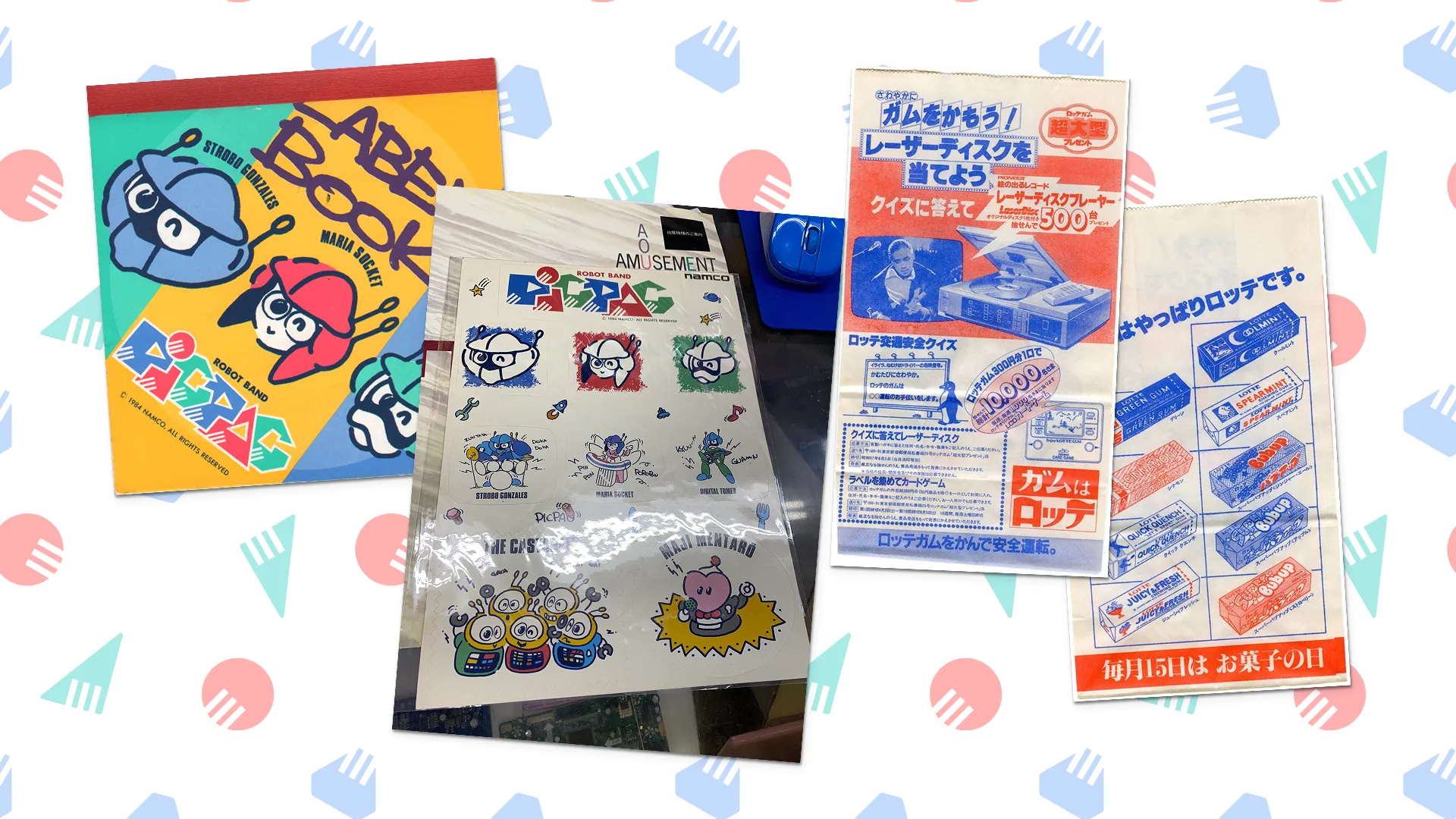
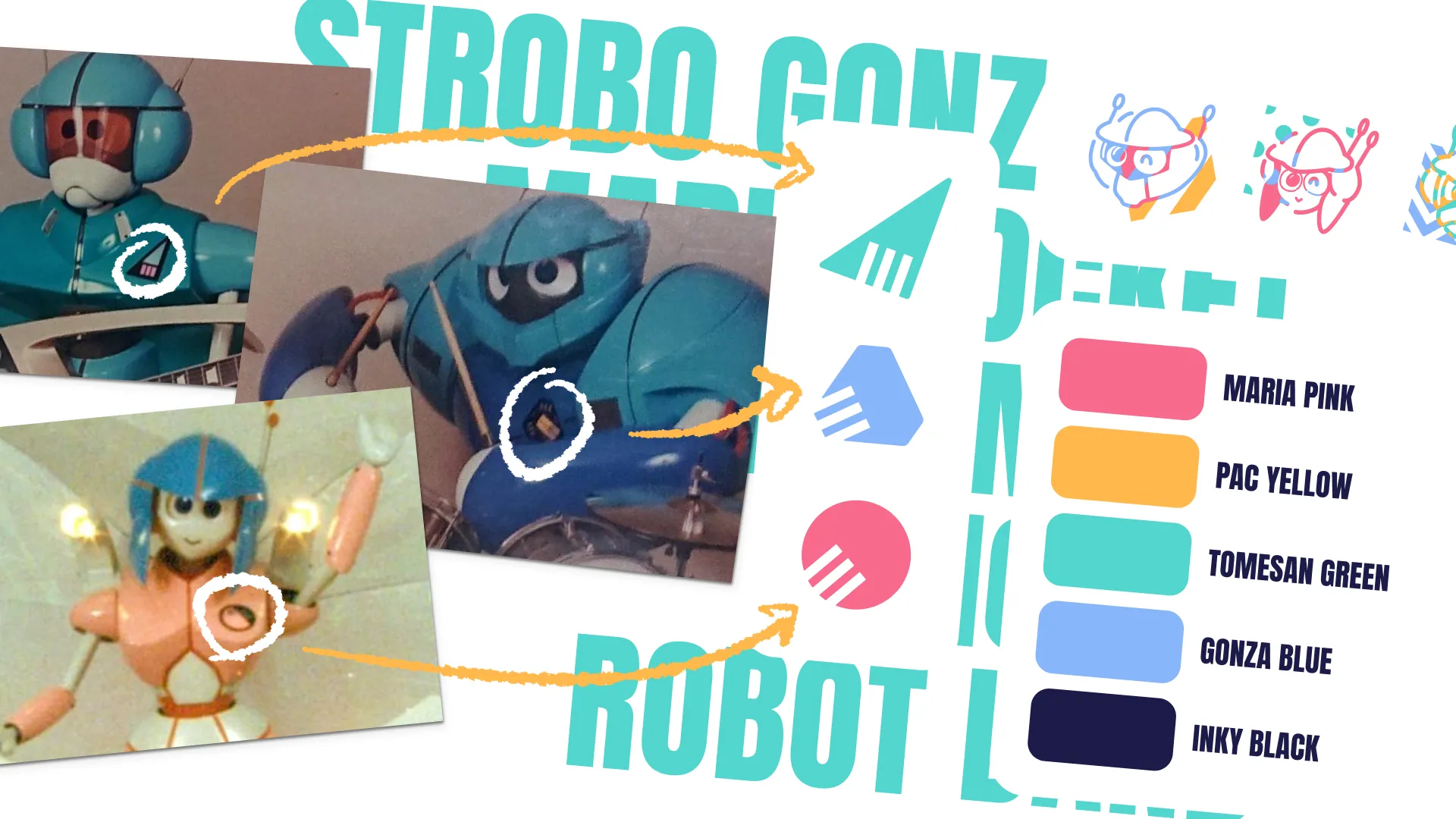
Thanks to Dom’s extensive research work, I was able to gather elements from multiple pieces of promotional material, which guided my choices in terms of color and typography. I was also able to carefully vectorize some illustrations of the band’s members to use as decorative elements at various points. For the treatment of photos, I was inspired by magazines and screen printing techniques of the era, which not only provided a visually striking presentation, but also helped a lot to hide the imperfections from low resolution pictures.
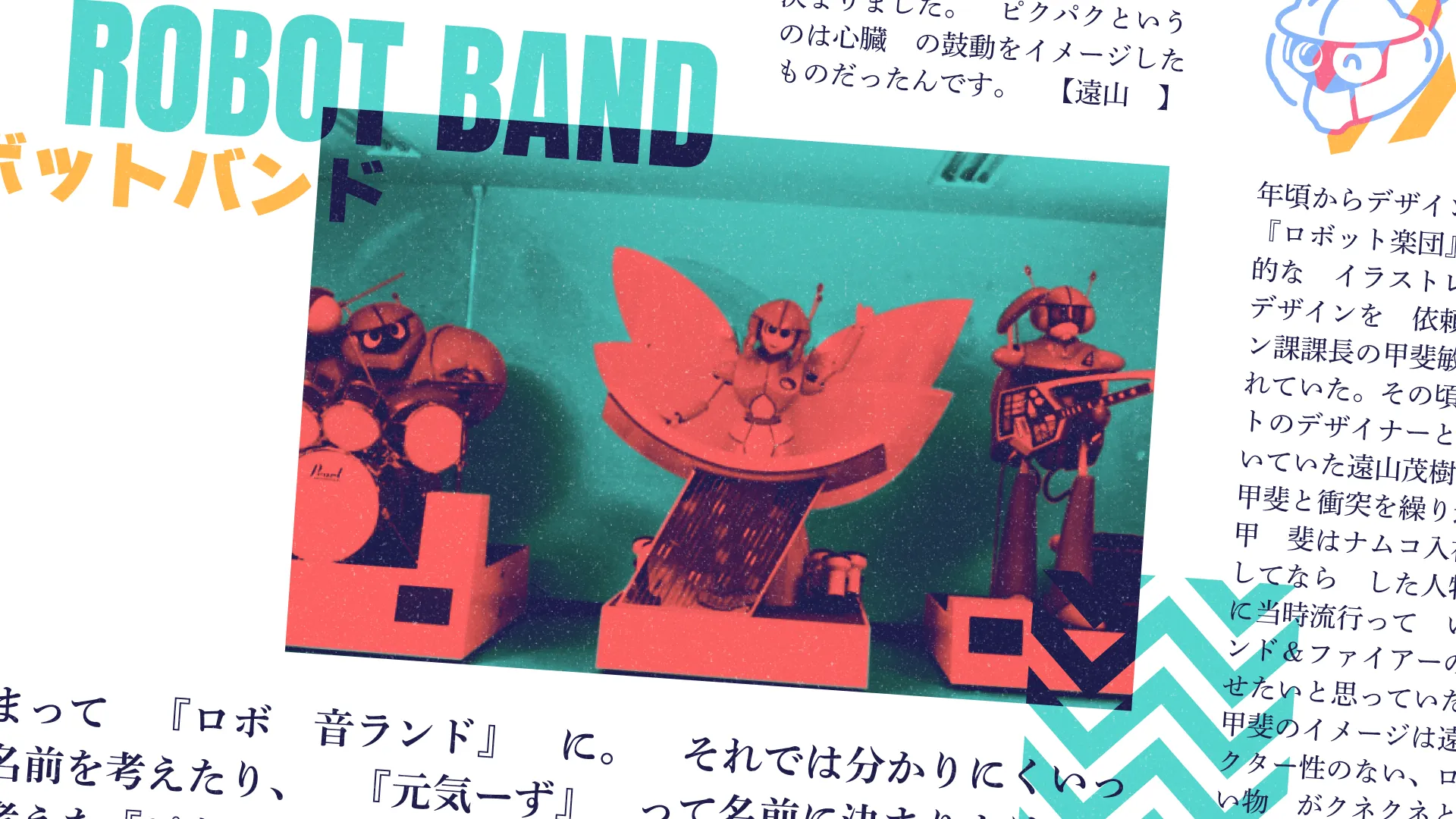
The result was a library comprised of a soft pastel color palette, bold and condensed typography, and plenty of illustrated elements that could either be used individually as decorative pieces, or turned into patterns for use as backgrounds.
I also got to turn some of these elements and explorations into animated graphical elements, built in Adobe After Effects. Through the use of a low framerate inspired by stop-motion animation, subtle ink-on-paper textures, hand-drawn elements, and parallax effects, I was able to inject some extra physicality to these motion graphics.
Working on these animations was also a great opportunity to explore Adobe’s Essential Graphics toolkit, which lets me turn my After Effects compositions into flexible templates with parameters that could be adjusted directly from Adobe Premiere Pro, the software used to edit the video itself. Thanks to that workflow, the animation used for archival photos could easily be reused by Dom, letting them swap out the picture, change the camera angles, and randomize the position of decorative elements without leaving the editing timeline.